Tuesday, July 31, 2007

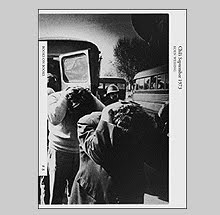
Zwischenzeit by Roland Schneider


It’s the Titanic; The long hallway, doors left and right leading to ship-like narrow rooms. Doorknobs are modified, so no one can hang themselves. Over and over again the disturbing sound of shutting doors. After dusk, there is the echo of human voices in the hallways. It is much louder and far reaching than during the days. Again and again these shutting doors fall into their heavy locks until late after midnight. At 10 o’clock straight, the guards/nurses lock the unit doors. The only way to escape is by passing through the guarded hall where the nightly ‘special medicine handout’ takes place. At a table in the hallway they play cards. At 2 a.m. it’s quiet.

These words begin Roland Schneider’s book Zwischenzeit (Meanwhile). After suffering a mental breakdown, Roland Schneider was admitted to a psychiatric clinic near Bern, Switzerland in the summer of 1987. Upon entrance, he was granted permission by his doctors to photograph freely as a therapeutic practice for the recovery of his mental health.

Unlike many journalistic essays constructed to give a view of mental health, this one is from the perspective of the patient. As John Berger has suggested, in every act of looking there is an expectation of meaning, this set of pictures made within this tumultuous time in Schneider’s life is an exploration into meaning and being and awareness. This is perhaps art created for self preservation rather than for an audience.

The book starts with text from Schneider who gives us a view into his own thought processes and his understandings of the physical confines he has found himself within. His conjuring an image of the Titanic is apropos as we are not sure who will escape this setting. Even Schneider, as grounded as he can seem to be at times, might sink under the weight of his illness or the surroundings.

On the walls, on the ceilings, everywhere: rebellion in the shape of open cracks. Like gaping wounds the walls grey mortar and the naked old brick underneath becomes visible. Everywhere destruction, everywhere. Shattered walls being eaten from countless morbid destinies. Disturbing traces of repeated misery. Day after day, night after night, year after year, life after life.

Nothing has changed here for decades. Not a single brush of fresh paint has touched these walls. Coffee has been spilled. When? Yesterday? Today? How many x- years ago? This disgusting brown color has tanned the wall irreversibly. Everything is chronically ill here. The disturbing condition of the rooms. The condition of the people The clock above the entrance door tick-tocks endlessly for nobody. Emptiness. Time stands still, while the grey brick &mortar walls crumble.

His lucidity is found not only in his descriptions of the clinic but also in the awareness of photography’s role in the descriptions of mentally illness as he questions his right to photograph his fellow patients.

What is it that allows me to photograph here? Who am I, standing in the midst of these people shooting photos? Who gives me the permission to ruthlessly photograph these humans (people), without asking them? But they wouldn't even know what I am asking. They only speak their own confused unintelligible language. Here and there some words resemble the ones I use. In what kind of position am I here? A madman just like them? A visitor able to move around and to leave whenever? A sort of tourist with camera? Or the voyeur who indulges in others harm?

What is interesting about these photographs is their avoidance of the “look” of mental illness. We have seen Claudio Edinger’s, Raymond Depardon’s or Eugene Richard’s images of mental illness. These are far different. Other than two photos of Schneider’s that feature a restraining chair, it may be difficult for the viewer to pin point what type of facility these images were made within. Schneider’s attention is paid to the more mundane in a way that the other photographers overlook or cannot see because it is not within their understanding. What he gives us is a look into a world that is fraught with obsessive observation of the seemingly mundane that serves as metaphor for those not held within the confines of the facility.

Schneider captions his photographs, often humorously, giving insight into how he internally coped with his surroundings. The toilet is transformed into a “Throne” and a clothes hook installed upside down (caption: Ha Ha Ha) proves to be a humorous aside. Others hint at darker meanings as his contemplation of a different use he could find of the small chain that connects to the rubber sink stopper.

The book, published in 1989 by Der Alltag (there is another edition called Entre Temps), has a modest trim size of 7.5 X 10 inches and is horizontal in its layout. The 100 photographs appear one to a page and on the right. Captions are provided curiously on the backside of the page that contains the photo (overleaf). One interesting aspect can be seen in the orientation in that the vertical photographs are displayed as horizontals which, perhaps I read too much into these things, can be metaphoric for the journey we are taken through. At first, these vertical images upset our understanding much in the way that, like Schneider’s reality, things are to be figured out.

The book isn’t very well printed but this perhaps is not the point. I could be argued that the rawness of the images is amplified by this presentation. The sequence seems very constant. Meaning that, there are no major fluctuations to the rhythm. These are images that could be subjected to shuffling and still work. Only at two points does he give us small sequences that would not survive being broken up. One is a somewhat unnecessary sequence of three images from the same situation of a woman crying that starts to feel more of reportage than the rest. The other, more enjoyable sequence, is of three images that fall completely out of focus that hint at his psychosis or the effect of medication.

In the afterword Schneider’s doctor from the clinic recounts that “the re-discovery of his artistry lead eventually to the patient’s recovery.” He goes on to report; “Roland Schneider’s work proves, that the disturbed soul has hopes, desires, fears, which we (the healthy ones) all share. It is not lost, but has only changed its proper expression while being at a crisis point. This is the reason why the first exhibition took place where the patient photographed. Perhaps the viewer of these photographs shares my experience when I looked at them: Unexplainable impulses and emotions rather than intellectual stimulation.”


Special thanks again to Patrick Becker for his translation of the German text.

Book Available Here (Entre Temps)

Saturday, July 28, 2007

Miroslav Tichy by DuMont Literatur


Starting in 1948, Miroslav Tichy’s life seems to have been comprised of many personal protests. He rebelled against the changes brought about by Communism in the late 1940’s and was forced to leave the art academy in Prague where he was studying painting and drawing. As a result, he did all he could to drop out of society. He stopped working and spent most of his time wandering the city parks. He neglected his appearance. He would wear the same clothing for weeks and repair it with wire. He grew his hair and beard long. He was the opposite of the image of the new Socialist man being championed by the new government.

Through the 50’s and 60’s he paid a high price for his dissidence by being forced to spend eight years in prisons and psychiatric clinics. He suffered many incidents of repression afterwards including being forcefully evicted from his attic studio in 1972 and subsequently having his artwork thrown into the streets.

His rebellious streak seems to have carried over into his photography which he started in the 1960’s. He avoided anything that smacked of ‘correctness.’ His is a practice of photography, at least technically, would be considered 180 degrees from the procedures Ansel Adams was laying out in his technical book series of the late 40’s and early 50’s.

Using handcrafted cameras that were an assemblage of cigarette boxes and paper tubes with lenses from eyeglasses, his lo-fi equipment seemed to mock the technological progress the world was experiencing with flights into space and nuclear warfare capabilities.

With his homemade materials, he photographed the women of his town of Kyjov. These are images that were made mostly surreptitiously of women in the streets or sun bathing at the local pool. Some are aware of his presence and others are not. His photographs highlight their bodies and are not shy about revealing his interest in their sexuality. The abundance of cleavage and thighs in his images attests to that. The extreme soft focus from his handcrafted lenses makes some of his clothed subjects look nude. It might all seem a bit creepy if these were clear and crisp descriptions but his equipment distorts and reduces the images down to a simpler form.

Comparison has been made to Garry Winogrand and his obsessive habit of photographing women. For both, the hemline of short skirts is often their focus of attention and they seem to have perfected their timing to snapping the shutter when the bottom of a skirt falls highest on the leg while mid-stride.

These are lusty pictures, but they are not reduced to the lowest common denominator. They are lusty in the same way that Matisse and Picasso reveal in their descriptions of bodies.

With seeing Tichy it is impossible to ignore his process of creating images which extends far beyond the usual. He takes pencil to the image to finish off lines obscured by the uneven chemical development or outfits them with frames of colored paper and cardboard. The final stage of finishing, which is entirely non-photographic, seems to be the most important in creating the Tichy patina. The prints are left for years to be slept on, sat on, rained on, and in some cases, chewed by rodents. Or they are simply ignored and discarded into a pile to collect dust. There seems to be a metaphor at work. No matter the aging or deterioration of the photo paper, the sense of that initial response to beauty remains unblemished.

Tichy has just come into the public view and at 79 had his first solo exhibition at the Seville Biennial in 2004. In 2005, the Kunshaus in Zurich exhibited his work and DuMont Literatur published a hardcover catalog. Miroslav Tichy includes 106 works by Tichy and an essay by Tobia Bezzola and another by Roman Buxbaum. Buxbaum is the son of one of the psychiatrists that treated Tichy during his stays at the psychiatric clinic in Opava.

The book is well done aside from its neon pink spine, backcover and endpapers. The reproductions are fine. This title is out of print and rather expensive when found. At the end of this year Hatje Cantz has announced that they releasing a monograph of Tichy in December.

There was also a small book issued in the FotoTorst series of Czech photographers but like to Photo Poche series, they are nice but a bit too understated in trim size to serve the work well.

It isn’t often that discoveries like Tichy happen, especially when the artist was doing their best to keep themselves a secret. Luckily he has been flushed out of his hiding space so we can discover what he was leaving for the dust and mice to claim.

Special thanks to Bernard Yenelouis for bringing Miroslav Tichy to my attention.

Book Available Here (Miroslav Tichy Kunsthaus)

Book Available Here (Miroslav Tichy Hatje Cantz)

Thursday, July 26, 2007

The Physical Print by Richard Benson


In March of 2005, Yale University had an exhibition celebrating the different print processes in photography.

The show’s curator and Dean of the art school Richard Benson explains:

This show is a history of photography, but one that is hung upon the changing technology of photographic printing. If we examine the 165 years of the medium, and try to make sense of it, we find that many threads of development are apparent, because photography is so young that its evolutionary stages remain accessible to us in the junk heaps of our recent past. Photographs were used for different social and commercial functions, turned into high art, and transformed into ink replicas for wide distribution. One small aspect of this whole has been the steady development of a rich set of systems for making the photographic print, and this particular technological history is there in my pile of collected pictures. This show is an eccentric walk through the history of photography, using its printing technologies as guideposts for the journey.

A catalog called The Physical Print: A Brief Survey of the Photographic Process accompanied the exhibition. At first it resembles a scholarly book with its plain cover, academic title and spiral binding but Richard Benson’s accompanying text to each illustration departs from common textbook writing. They are not only informative as to the different processes but enjoyably tweaked with personal reflection.

Richard Benson, is certainly no stranger to printing technologies. Anyone who has a habit of checking the printing credits in books will recognize his name as he has made the separations and overseen the printing for many of the most beautifully printed ones. He also won a MacArthur Grant for his development of a printing process involving acrylic paint on aluminum. I saw a show of these images and their tonal range was exquisite. They were printed in editions of one. If you bought the print, you also got the clipped negative.

In a conversation with John Paul Caponigro he explained the process and what set him on his pursuit:

“I figured out a great way to make pictures that nobody's interested in. It's too hard to do. I wanted a way to make pictures, photographs that allowed me to make them in multiple layers so that as I was making the pictures I was continually responding to the reality of the thing being made. The nature of something like painting is that you're continually being informed by what you do. The nature of photography is that you're not. You're being informed picture to picture what you do. If you're printing one negative you're being informed print to print about what you do. But it's completely different than the painter who puts a piece of the picture down and the piece indicates what the next move should be. That's a different procedure and I wanted to put that in photography. So I figured out a very basic, although it ended up being very intricate, technique that involved making a very thin gelatin stencil on a sheet of aluminum that had a white painted ground on it. And the stencil had holes in it which were derived from half-tone dots and I was able to dip this panel in paint, acrylic paint with pigment. After the paint had dried I could scrub it and where the paint was over the gelatin the paint would come off and where there was a hole in it the paint would stick. The idea was to make a picture step after step after step and each step helping me understand how to make the next one. The final object would contain the effort put into it. And so I got really interested in doing this. I did it for quite awhile. And I stopped doing it because it was too hard. The truth is I wanted to do something with the MacArthur that was original. I thought here's my chance. Let's really do something new. I did.”

Unfortunately, there is not a page in the catalog dedicated to this process that he invented. He does include and champion the new digital technologies. As he has remarked elsewhere, he is happy to be out of the darkroom, "Making art in a room in the dark is the stupidest thing imaginable."

The catalog includes 56 variations of printing processes and uses mostly completely unknown images as examples. Only seven images were familiar to me and the artists range from the likes of Helen Levitt and Lisette Model to lesser known names such as Allan Chasanoff and John Lehr. As you could guess, the printing is well done.

I believe this catalog is still available through the John Edwards College, Yale University.

Book Available Here (The Physical Print)

Monday, July 23, 2007

Legio Patria Nostra by Giorgia Fiorio


While watching the Claire Denis movie Beau Travail, something about the film started to look very familiar. It is a fictional film that describes the lives of French Foreign Legion soldiers on base in Djibouti Africa. After fifteen minutes into it I recalled why this portrayal seemed so familiar, which led me to pause the DVD and pull a copy of Legio Patria Nostra by Giogia Fiorio off my bookshelf. In 1995, the Italian photographer Giorgia Fiorio photographed Legionnaires stationed in Djibouti, Bosnia, Chad, Guyana, Croatia, Corsica and France.

The familiarity, however, was not because both of these women, Denis and Fiorio, used legionnaires as their subject. I don’t usually watch war films and have them remind me of James Natchwey photos. In this case, it was because both women approached their subjects with similar sensibilities.

Anyone who knows the work of Giogia Fiorio knows that men repeatedly serve as the subjects of her projects. I should really say that masculinity is the subject of her projects as the men she photographs are boxers, bull fighters, firemen, fishermen and soldiers. She is not one to usually focus her lens on everyday schleps going to and from work. She seems very interested in a type of man who in general terms would be considered manly men. Hers are the same types that inspired the Greeks to make sculptures and Leni Riefenstahl to glorify. Claire Denis explores a similar machoism throughout Beau Travail.

What alternately links these two visions is their description of the strangeness of these soldier’s lives. Firstly, as foreign legion soldiers they are naturally ‘foreigners’ wherever they are stationed. Their strangeness is compounded by the fact that their world is so insular being that it is within a military encampment. Women are not a direct part of the world they create. This is a homosocial world that ultimately, in the hands of these two women artists, is described in overt homoerotic terms.

In, Legio Patris Nostra, Fiorio photographs the men as they struggle through survival training and rescue maneuvers that at times seem more like torture than a fitness regiment. Using 6X6 square format camera, her photos alternate between being straight portraits and moving through the obstacles with her subjects. The photos taken on the fly, in my opinion, are her strength.

The book is structured so that when we first meet our group of legionnaires, they are emerging from water training (wet behind the ears). We follow their torturous training and daily routines and end with a few images of them as they awkwardly navigate their way through their adopted landscapes and mix with the locals. These photos are very few in number and thankfully so as Fiorio is as much an apparent spectacle as the white capped legionnaires. The locals stare like deer with Fiorio’s flash in their faces.

Although it may seem cliché, part of the appeal of some of these photos is the sense of how these men rely on one another for survival and the creation of that different and regimented way of living. The military is all about symbols of power and control and here those same symbols are plenty. The bodies of the men are taut and their pent up energy seems barely contained even when the bodies are at rest.

One of the problems with Fiorio’s work for me is that aside from several extremely well made photos that transcend their subjects, much of her other work can feel like a simple editorial story.

The book Legio Patria Nostra was published by Marval in 1996. It is square and 11 X 11 in size. The design is really well done in the way that the images lay out on the page. They appear in many different sizes and the choices of which appear small and which are given more real estate is well conceived. There is a lot of text in French which flows in columns in appropriate places throughout the book. Unfortunately, as I have stated before, I do not speak or read French so I cannot say how interesting or integral the text is in relation to the photos. Purely in a design sense, it has a nice presence.

The printing is well done except in a few circumstances. I think Fiorio shoots with a filter over her lens that darkens the skies in her photos and this sometimes becomes a difficult aspect for the printing to handle. That dark sky along with: the tone of the uniforms, the tan skin of the men, and the drab surroundings, often share so much of the same tonal palette that the printing winds up looking muddled, even though they are not flat in contrast. Over all though, I think it is a well put together book that is more appealing than many of her other titles. Unfortunately, it is out of print and somewhat difficult to find at a decent price.

Book Available Here (Giorgia Fiorio: Men)

DVD Available Here (Beau Travail)

Tuesday, July 17, 2007

Two Books on Jeff Wall from MoMA

When Jeff Wall resumed making art in 1977 after several years studying art history, one of his thoughts was to try to bring photography into the realm of respectability that painting and other arts have occupied.

“Most photographs cannot get looked at very often, they get exhausted.”

“I don’t like the traditional 8 by 10; they were done that size as displays for prints to run in books. It’s too shrunken, too compressed. When you’re making things to go on the wall, as I do, that seems too small.” “If painting can be that scale and be effective, then a photograph ought to be effective at that size too.”

I have had a love hate relationship with Wall’s work since I had seen ‘Mimic’ in the late 1980’s. After seeing more of his work, I gravitated towards the disturbing realist side which shows average people butting up against the world and their own psyches. I didn’t however like the side of Wall prone to flights into fantasy and allegory with picnicking vampires and dead Soviet troops conversing in a pit of gore. The work I was drawn to seemed to occupy the same psychological space with my earliest interests in art through people like Raymond Pettibon. At twelve or thirteen, Titian and Velasquez described lives that to me might as well have been from Mars, where as Pettibon at least harnessed my angst as a youth.


When I went to art school and started to mature to the possibilities of photography, I noticed aspects of Wall’s work that, for all of their staging and control, seemed off and would bother me like a sore tooth. Why were the toes cut off in several images? Is this me holding onto some idea about the form of the picture that couldn’t be challenged?


Wall is critical of photographers that “want to nail something” or “hit it square on and make it impressive.” Wall has described his desire to “miss the nail and leave it crooked.” Maybe this accounted for those missing toes, I say as the spirit of Garry Winogrand draws back his hand to remind me, “There is no special way that a photograph should look.” Sorry, I just enjoy seeing the continuation of the unbroken roundness of the toe of a shoe when it is so close to being complete.


On a similar note, one fascinating aspect is his references to wanting to be a street photographer but “without the hunt.” In fact, the only other photograph that graced the slide screen during a lecture I saw him do last year was one of Garry Winogrand’s crowded frames and an unpublished, obscure one to boot. Mr. Wall had spoken about how he employed people for weeks at a time and photographed them within his scenarios. He would let them find their way with limited direction. But after knowing how painstakingly detailed his post production process is I started to automatically think of one of my favorite images of his and many questions arose in me.


There is a fourth person in the photo just in front of the man in the raincoat. Why is the fourth person necessary? What does that person represent? Before I thought it was just a messy handling of a fourth figure. It happens all the time in photography and even in painting. But with the post production control, that element could easily be removed. Is this also an inclusion of an element or flaw to evade perfection and leave it crooked?

It is undeniable that Wall is a very intelligent and learned artist. So erudite that after seeing Mr. Wall lecture about his work at the MoMA, when I went back to see his retrospective show at that same museum, all I saw for weeks were giant medicine cabinets full of art history and theory. Yes…medicine cabinets. Look closely. That black line that splits the image into two. If you pull at that black seam you will see that one panel is capable of sliding behind the other.

When slid back, among the fluorescent tubes (crass commercialism) you see lined up in neat rows hundreds of plastic amber medicine bottles. Looking closely at the labels you will read many names of the prescribers. Andre Breton, Guy Debord, Theodore Adorno, Max Horkeimer, Alfred Hitchcock, Denis Diderot, James Collins, Ernst Bloch, Bertold Brecht, Mikhail Bakhtin, Jacques Lacan (a bottle of Prozac). There seems to be no order that I can discern. There are others marked Neo-avant-garde, Neo-realism, Dada, Old Masters, French Romantic, Constructivist, Minimalist, Surrealist, Conceptual (homeopathic drops).

Pressing and twisting I could not crack them open. Damn child-proof caps.

Luckily, as Peter Galassi points out in his essay from the MoMA exhibition catalog, ‘If it were necessary to match Wall’s erudition in order to understand his pictures, there would be no point in trying – and most of us wouldn’t have a chance anyway.'


Along with the catalog for the show, MoMA has also published Jeff Wall: Selected Essays and Interviews should you be interested in all of those little bottles that are just behind the surface of those transparencies.

Admittedly for me several of these essays in this 350+ page book are a bit too dense for me to get through without reaching for my tattered Jansen’s art history book or any number books on art theory, but they are worth deciphering. Essays included in this volume that have become resonant to me are ‘Monochrome and Photojournalism in On Kawara’s Today Paintings’ and ‘Frames of Reference’ which I recommend to anyone who may be interested in photography and how it was adapted by conceptual artists.


The museum also published a handsome catalog to accompany this retrospective. It includes all 41 works that were on display along with a good essay by Peter Galassi. This title was necessary as there was a major traveling exhibition of Wall’s work but as I look at my own bookshelves I question how many books are really necessary for an artist who has only 130 some works to his name. If you cannot afford Steidl’s Jeff Wall: Catalogue Raisonné that was published last year, this one would be a good starter for anyone who doesn’t have Wall represented on their shelves.

It is well printed; my only complaint comes with my wish that they had gone with a different book designer. The name of Galassi’s essay, ‘Unorthodox,’ should have served as a hint for a departure from the norm. The traditional vertical format that they settled on does not treat the photographs well. That being said, Wall’s use of various frame ratios and scale would be a challenge to any designer as his images need to be large. Much of the detail of his work gets sacrificed in the book form. Besides the size problem, the designer, because of format constraints, has pushed many of the images awkwardly into the gutter. Luckily the book is bound in a manner that allows it to open quite flat.


These are the same problems with all books that try to encapsulate Wall’s work. In the contemporary discussion of some artists being ‘book’ artists and some being ‘wall’ artists, we know where Jeff’s work is best served.

Book Available Here (Jeff Wall MoMA)

Book Available Here (Jeff Wall: Essays and Interviews)

Monday, July 16, 2007

Kahitsukan Kyoto Museum of Contemporary Art Catalogs


Catalogs of ‘classic’ photographers like Robert Doisneau and Henri Cartier-Bresson are dime a dozen, but recently I stumbled across a series of beautifully made books put out by the Kahitsukan Kyoto Museum of Contemporary Art. That museum has for the past decade has published handsome catalogs from their photography exhibitions.


Most of the photographers stay within the well beaten path with Willy Ronis, Henri Cartier-Bresson, Marc Riboud, Robert Doisnou and Sarah Moon (all French) but they also have a handful of Japanese artists available too with books by Nobuyoshi Araki, Ihei Kimura, Keiichi Tahara, Kanendo Watanabe, and Shinya Fujiwara.


At around 20 to 25 dollars (plus shipping from Japan) they are cheap considering their beauty. Made mostly with heavy weight matte paper and a dust jacket wrap-around that adds to the elegance, these soft cover books feel great as objects. The reproductions range from being very well done to fair. At over 100 pages each and with 50 to 60 images, they are substantial.

I haven’t seen the Japanese artsist’s titles (only the French) but all of the titles seem to stay within the same trim size (approximately 9X11.5) and quality of materials in the construction. Only the Robert Doisneau title varies with its full bleed image on the cover and heavier coated paper stock.


One of the Japanese titles is Nobuyoshi Araki’s Hana-Jinsei which is available as a regular edition at 3800 yen or $32.00 USD and as a limited edition with a Polaroid for 31,500 yen or approximately $250.00 USD.


There is also a regular edition of Sarah Moon’s Circus available at 6500 yen or approximately $55.00 USD and a limited edition for $700.00 USD but it is unclear on the website what that edition comes with for that price.


Oddly, from what I have seen, my favorite is the Willy Ronis catalog. Ronis is always someone who I attributed extreme sentimentality towards his visions of Paris. In this catalog that romantic view of Paris is present but other images belie such an easy generalization.


All in all it is the materials and quality of construction that raises the bar and might justify getting your money but if you are looking for different imagery, these are not worth your attention.

Buy Online Here

Friday, July 13, 2007

Daddy, Where Are You? by Tierney Gearon


Tierney Gearon has always raised red flags with her photographs. In 2001 while her show was on exhibit at the Saatchi Gallery in London, the police threatened to charge her as a child pornographer. Many of her images were of her naked children at play. The threat of those charges was dropped after much of the British press came to her defense.

In her new book Daddy Where Are You? Published by Steidldangin, she again faces some controversy. This time, the question of exploitation has been raised. A documentary called The Mother Project by Peter Sutherland and Jack Youngelson takes a look at Gearon and these controversies.

In this work, Gearon has been photographing her mother who suffers from mental illness. The book on which this work is realized raises many questions about the relationship between mother and daughter and in these images; those stereotypical roles seem to have been reversed due to the illness. Tierney is now the authority figure and the mother is now the child so to speak. The mother is now the one that has to be reminded that good girls do not lift up their skirts and that boundaries should exist.

When I first looked at the book, I saw a photographer taking advantage of a fruitful opportunity; an eccentric woman, Tierney’s ill mother, living in a somewhat squalid home. Along with this opportunity was the added advantage of a ‘cover’ if questioned. For Gearon, she isn’t taking advantage of her mother’s situation and illness to make a set of pictures she will benefit from, she is “exploring a relationship,” albeit a complicated one. After her London show, Gearon reflected that that experience with the police “made me question whether I was a good mother.” Well, this new project gave her the opportunity to explore “motherhood” (or daughterhood) with an obviously visually arresting subject.

Normally I wouldn’t be questioning this. Please dear readers do not get the impression that I have much of a problem with being an opportunist. No matter how much I write about exploitation, I photograph in the streets and “use” people as my photographic fodder on a daily basis. As I have explained before, photographs are fictions, they may represent facts as seen within a brief slice of time, but the reading of those facts is mostly fiction. Photographs are quite separate from absolute truth.

That being said, I raise these issues here because Gearon asks us to. Throughout her work she is pushing buttons. Before it was, for example, a photo like below.


A prepubescent boy with his pants pulled down pissing towards the camera while in the background, another child sucks their thumb. This is definitely ‘clear cutting’ a path to a disturbing thought process for the viewer. It gets rather “dodgy” as the English say. In another photo, a naked child (innocence) wears a mask of an evil looking pig (anything but innocent). That photograph is about knowledge and experience placed in contrast to a naked child’s body. Sorry Tierney, although I agree that the response of potential criminal charges was unnecessary, you were begging for it to be heeded and thus challenged. The same “act of exploration” in Daddy, Where Are You? is challenging a response. Take a look, ‘exploitation’ and ‘exploration’ follow one another in the dictionary.

What we do have in Daddy, Where Are You?, is a set of relatively well made photographs of an older woman who seems like a joyous free spirit (if we didn’t have the knowledge of her illness). Kind of like a dash of Larry Sultan and a jigger of Grey Gardens. I like the work best when Tierney isn’t leading her mother into situations that are extreme.
She is able to pull off many remarkable images. Her sense of timing is great.


Tierney’s mother is unpredictable. Although there is no example of violence, when Tierney introduces her new born baby into the mix, the frailty of the child is stressed. In one image, the mother dons a Halloween skeleton mask and grimaces towards the camera while a child screams crying with fear. (Note to photographers: Leave the masks at home unless you plan on knocking off your local bank. Its too easy.) A different image in the book similarly refers to the darker side of her mother’s personality like the mask image but doesn’t resort to such attention getting tactics. A young boy looks wearily at the grandmother while holding a smiling infant. The young boy seems to be protecting the infant from the smiling grandmother figure. This is a much more frightening image to me than the one with the silly Halloween mask.


One other path the book walks is looking at the photographs as if it may be a premonition of what the future has in store. Often Tierney directly compares her body with her mothers and at times their behavior is interchangeable. Will Tierney suffer like her mother later in life? Who knows? What we are privy to, brings a certain amount of discomfort. Tierney’s internal question of whether she is “a good mother” is expressed perfectly as she photographs her new born crawling along alone in the street in front of the mother’s house.

Another button pushing moment that appears both in the book and documentary is one in which Tierney wants to make a shot of her mother nude and looking like she is breast feeding a new born baby. In the documentary, Tierney questions whether the shot is going to “look dodgy” as she photographs the scene inside of a barn. A version of the photo done outside of the barn appears in the book. Well, yes Tierney, it is dodgy. You know it was dodgy (that’s why you said what you said) and knew it would be perceived as such. This type of photograph brings the book down a notch. There are many images that seem to lead in this direction that we could do without. Her points are being made with more eloquent and poetic images.


When charges of exploitation are raised, we often look for the damage done. Was Gearon’s first project that featured her naked children damaging to them? In the film The Mother Project, those same children seem confident, well adjusted and at times, able to express themselves in ways that are not only intelligent but remarkably poetic. They are free spirits but do not seem reckless. Tierney’s picture making to them was mostly fun (although the son remarks that the process of being photographed is boring.)

Her mother’s comments on the work range from complaining that her daughter is making her “look crazy” to saying that every photo Tierney makes is beautiful. Many of them are. What I wonder about is where Gearon will go next. I hope she matures past being controversial. In my opinion, it is only weighing her down.

The book is on the Dangin imprint from Steidl. It’s 11X14 trim size allows the photographs to reproduce at a nice large size. It is well printed. The sequence is arranged according to the seasons. We start in the summer and make our way through winter and into the warmth of the following spring. Gearon loves to photograph in the golden hour so many of the images are seductive with their warm yellow hues.


The documentary, The Mother Project is also very well done. I was skeptical that the subject could sustain a full length film but it does and never seems hollow or dull. Made over a period of four years it probes into Gearon’s process of picture making, unconventional family relationships and the controversy that has surrounded her work. It is distributed by Zeitgeist Films and will be available on DVD in September.

Buy online at Steidlville


www.zeitgeistvideo.com

Sunday, July 8, 2007

John Szarkowski 1925 - 2007

I once heard John Szarkowski say that his career as a photographer consisted of “a beginning and an end.” We know what happened to the “middle.” That history is well written and the shift in ideas brought about under his influence is still being felt today. In fact, one could easily argue that the inflation of the art market and current attitude towards photography is greatly due to his efforts of expanding the understanding of this medium.

What fascinates me is how a man whose passion towards the medium shifted from creating images to mainly handling images in one sort or another. There may be no use in speculating (there seldom is) but I do wonder what he would have accomplished as a photographer had he not accepted the position at MOMA. Thoughts like these surface when I see images like this one from The Idea of Louis Sullivan.


The Idea of Louis Sullivan was first published by the
University of Minnesota Press in 1956 and reissued by Bulfinch in 2000. The Bulfinch reissue is finely printed and I think follows the original 1956 edition with the exception of the addition of a preface to the new edition.


I had heard that his ability to communicate and express himself was cruelly robbed of him after suffering a stroke this past spring. That kind of cruelty of life didn’t seem to enter his own photography. His book The Face of Minnesota (University of Minnesota Press 1958), unlike much of the work he championed at the museum, mostly describes a values driven society who furrow into a plot of ground and create their legacies. His subjects work hard, are neighborly, and contribute unselfishly to create a sense of community. They exist 180 degrees from the work of, say, Robert Frank.

This sense of Midwestern wholesomeness is felt in his photographs, especially in his photos of children. They are the visual equivalent of Garrison Keillor’s Lake Wobegon youths where “all the children, are above average.” They are scouts; they prey and they listen to their parents.


Szarkowski’s photographs of architecture celebrate accomplishments and improvisation in their descriptions of how, in the words of Sandra Phillips, “craftsmen and engineers solve building problems.” He approached the medium with the same sense of problem solving. This was especially true of his book Mr. Bristol’s Barn (Harry N. Abrams 1997) in both subject and application.

Since his work was segmented we will never know how it may have evolved uninterrupted. In his efforts, we can see a man finding his way and taking pleasure in looking at the world around him. And although he did find some success as a photographer with two Guggenheim Fellowships and two books published, did he have a moment of insecurity that led him to sacrifice continuing that personal exploration? Did he not have anything else to say with photography? Or did he see such strong examples set with his contemporaries that it made the decision easier to make?


Starting in 2005, several museums including the Museum of Modern Art celebrated Szarkowski’s photography with an exhibition and book. Also by Bulfinch, John Szarkowski: Photographs is a beautifully printed oeuvre of his career as a photographer.


Regardless of whether it is his photography or through his curatorial duties that we remember him, John Szarkowski was a force in this medium that is not often felt. His sickness and subsequent death may seem to leave us a bit weaker but thankfully the residue of books, essays and ideas will continue to strengthen and enlighten.


I think if we want to truly honor this man’s contribution and memory: close this browser window, turn off the computer, pick up your camera, and go outside.

Book Available Here (Photographs)

Book Available Here (Mr. Bristol's Barn)

Book Available Here (Photographer's Eye)

Book Available Here (Looking At Photographs)

Book Available Here (Photography Until Now)

Book Available Here (Mirrors and Windows)

Book Available Here (New Japanese Photography)

Terryworld by Terry Richardson


THE FOLLOWING REVIEW IS RATED:


Terry Richardson has a book called Terryworld!
Terry Richardson has a cock!
Terry likes his cock!
Terry likes to photograph his cock and other cocks!
Terry likes to have sex!
Terry has lots of sex!
Life is hilarious!
Terry’s life is great!
Live fast, Die young! (for Darby)
My friends are fuckin’ cool!
There are no consequences to our behavior!
My cat’s ass is hilarious!
My girlfriend is so cute!
Last night she held a cookie that read “eat me” over her vagina! (Terry took a photo)
My list of friends includes famous people!
Kate Moss is a friend of mine!
Middle America is fuckin’ hilarious!
That girl’s tits are fantastic!
I drew a watch face on my cock and wrapped it around my wrist! (Terry took a photo)
Beastiality is shocking…but very funny!
The 2000’s are the new 1970’s!
Your life is boring!
Terry photographed a werewolf in a wax museum. It was so fake!
My parents are to blame!
My best friend made out with a tranny!
I never got back at my tormentors from high school!
This is low art!
Terry had the guy shit in the cat’s box!
She blew me with a bag over her head!
I desperately miss being young!
Vincent Gallo looks exactly like Jesus Christ!
We drove around ‘mooning’ everyone!
Clowns are ironic!
The American flag is ironic! (Ol’ Bob Frank taught me that)
I like teddy bears!
You’re jealous!
I’m bored!

Published by Taschen 2004!
Taschen book craftsmanship!…’nough said!
(I am naked and flipping you off)

Whatever.


Book Available Here (Terryworld)

Les Glaneurs et La Glaneuse by Agnes Varda

There are many euphemisms for the act of photographing. Some people “go shooting.” Some “make pictures” while others “take pictures.” Now in the digital age, we are describing everything with “digital capture.” Photographers are thought of as hunters and subjects as prey. There are a whole slew of essays out there, some deeper than others, about photography and those perceptions.

While watching a recent Agnes Varda film, a new term came to my attention. A term that is kinder and gentler and more appealing to my sensibilities than the bloodthirsty terminology of the past.


The film, Les Glaneurs et La Glaneuse (The Gleaners and I) is about people who ‘glean’ or collect what is left behind after a harvest. The film explores the history and present practices of gleaning and salvaging by Varda’s interviews with a range of eclectic people.


It is ostensibly a film about waste and recycling. Food is mainly the subject. Varda seeks out people who glean after a city fruit and vegetable market closes and fill bags of produce only flawed by a bruise or wilted leaf. She finds a man who for ten years, has lived off nothing but found food. “To bend is not to beg.”


She also features a few artists whose livelihood is created through the use of found objects.


Within the film, Varda looks at herself as a gleaner as well. In French, the title means “the gleaners and the female gleaner” (Varda). Varda is identifying herself as a part of the group or lifestyle of the gleaners. The poor English translation of the title, The Gleaners and I, places her outside looking in at the gleaners. That aside, Varda reinforces her point that cinematography (and photography) is as much gleaning as picking up a piece of fruit to eat.


She cinematically ‘grabs’ passing trucks on the highway.


As a true gleaner leaves nothing to waste, Varda picks footage from her film that would have naturally wound up on the cutting room floor in most other films. At one point, she forgets to turn off her video camera and the resulting footage of the ground and bobbing lens-cap become its own enjoyable segment in the film.


Surprisingly, Etienne-Jules Marey makes an appearance in the film. Marey was the inventor of Chronophotography, an early invention that led to cinematography.


Marey much admired the work of Eadweard Muybridge, but was dissatisfied with the lack of precision in the images of birds. In 1882, he perfected the 'photographic gun', inspired by the 1874 'photographic revolver' of the astronomer Jules Janssen, and capable of taking twelve exposures in one second. Intersting note, that this type of photography and revolver style guns were invented around the same time. As Janssen and Marey's adaptations show, perhaps much of the hunting metaphor in photography sprung from these inventions.


For Varda and her film, beyond cinematography, Marey’s family comes from a long line of vineyard owners which was what led Varda to their doorstep.

Although it isn’t a book (what’s with all the writing about film and filmmakers Mr. Whiskets?) it is a wonderful film from the ‘grandmother of the French new wave’ that in its own way is about photography too.


It was released in 2001 and is distributed by Zeitgeist Films. Zeitgeist is well worth mentioning as they are also the distributors of the recent Ed Burtynsky film called Manufactured Landscapes, a film on Tierney Gearon called The Mother Project and a film on the photographer Sally Mann called What Remains. All of which will get further mention here at 5B4 in the near future.

DVD Available Here (The Gleaners and I)


www.zeitgeistfilms.com

Thursday, July 5, 2007

Life as a Night Porter by Chris Shaw


For ten years, Chris Shaw worked as a night porter in several London hotels. The chores of a porter on the night shift seem much different from their brethren who see the light of day. There is little time spent carrying bags to rooms, handing over the keys and receiving a few bucks tip. Instead, his energies seem spent on keeping the patrons from having sex in the hallways and alerting the maids when someone has spilled the contents of their stomach on the flower carpeting.

Life as a Night Porter published by Twin Palms in 2006 takes us through an average night shift as we tag along with Chris Shaw.

Shaw’s errands this night are attending to people locked out of their rooms (while naked). Getting that drunk passed out on the bathroom floor back to their room. Keeping an eye out for the hookers. And, oh, there is something wrong with the clothes iron in room 405. To fill the time in-between these tasks, Shaw photographed.

Hookers and limo drivers and the regular hotel staff are all cogs on the same wheel. Somehow the hotel runs and manages to hold onto its façade of exaggerated elegance even though we come to find that depravity has rotted the foundations.

Don’t get the impression that Chris Shaw is any the wiser just because he is the photographer. He is along for the ride as long as it keeps a roof over his head and a few dollars in his pocket.

According to Shaw, he came into this world of working in hotels because, one morning in 1993 he went out ‘to get the papers,’(he liked to drink) and returned two weeks later to find his girlfriend had changed the locks on their apartment. So he got a hotel job.

Shot with a cheap Centon camera, Shaw’s photography is raw and ugly and fits his subject perfectly. Contrasty. Grainy. Unfocused. Dusty. Underexposed. Overdeveloped. Light leaks. Sprocket holes. Badly dodged. Poorly burned. And finally, after the print is processed and dried (archivally of course) the caption is applied via Sharpie marker directly to the paper in his often illegible scrawl.

And what are the captions? Insights into the mind of a night porter.

“Keys like bats…like keys…like bats”

“The staff are always…………..the worst.”

And under one photo of a woman joyfully pulling up her dress to show off her underwear; “One door opens and another one hits you in the face.”

The book is well designed with its oversized format and the printing is as good as the originals would allow. It was printed in an edition of 2000 casebound copies.
If I had one complaint, it would be that the content never quite gets over the top as it hints toward. It seems a little light with 50 pictures and most of those are portraits of the other staff. Seeing that this is a hotel of Shaw’s creation, I want the shift to go on longer. I want it to tire me out so that by the end, I feel like I’ve stayed up all night. It does however suitably suggest that this job is mostly spent fighting off boredom.

As Shaw says: “It is a hotel of my own imagination. In reality, the hotels bear little resemblance to my pictures. It depends on how you look at things. In my experience, heaven and hell are right here on earth – and you can stay in either.”

These pictures are far from the inner circles of hell, but sure enough, they are very distant from heaven as well.

Book Available Here (Life as a Night Porter)

Tuesday, July 3, 2007

Bernd and Hilla Becher: Life and Work


I think at this point in the realm of contemporary German photography it would be nearly impossible not mention the influence of Bernd and Hilla Becher have had on at least two generations of photographers. Since the passing of Bernd Becher on Friday June 22nd 2007, I thought it appropriate to mention the book Bernd and Hilla Becher: Life and Work published by MIT Press.


Both Bernd and Hilla were born at a time (1931 and 1934 respectively) where as teenagers they lived within a devastated post war Germany. Born in the Siegerland, Bernd experienced first hand the landscape of the German iron industry as a child. In photography, they focused their early attentions towards the architecture of that same coal industry which they saw as examples of a pre-Nazi Germany and a steadfast foundation held against the reconstruction architecture that was taking place.

Using August Sander’s Antlitz der Zeit (Face of Our Time 1929), Karl Blossfelt’s plant forms and Albert Renger-Patzsch’s machine studies as early guides, they developed a working method of classification of various architectural structures they referred to as “Typologies.” Exhaustively working from subject to subject (cooling towers, blast furnaces, gas tanks, etc.) and by often displaying their results in large grids, they came to recognition in the art world as being minimalist or conceptual artists. This was a reading of the work that was far from their original supposed architectural mission.

Their approach to photographing was to reduce every aspect of personal style in order to emphasize the impersonal aesthetics of the buildings. This included the necessity to photography the structures straight on and from a height that provided a neutral vantage point. They look neither up nor down at their subjects, thus reducing the potential for politicizing these industrial structures. The 1920’s and 30’s depictions of industry celebrated it and held it up as signs of political or modern power. The Bechers neither monumentalize nor renunciate. This approach brings forth a notion in the viewer to compare one structure to the next. One pleasure of their work is following their direction.

That notion of comparison is what sets the Bechers apart from other photographers interested in types like August Sander. With Sander we look at his portraits one at a time and there is a clear division between each image. They are separate worlds that share common threads of humanity. The Becher’s types are linked physically by their presence as series. To see only one image on display in a show would amount to seeming like staring at an orphan. This, of course, is primarily because we know their working method and have been conditioned (or poisoned). To the unconditioned, could one photo from their work stand individually like a Charles Sheeler photograph?

Aside from their personal work, they were also the team behind the famed photography program at the Staatliche Kunstakademie in Dusseldorf whose star pupils included Thomas Struth, Thomas Ruff, Thomas Demand, Candida Hofer and Andreas Gursky. Their Freie Kunst (free or open art) program at the Kunstakademie was based on a master-student relationship. Although only Bernd was officially employed as a professor, the importance of Hilla’s contributions to their collaborative art led them to often conduct critiques of student’s work in their home. They served as individual mentors to students and only at their sole discretion did they then granted a diploma after they felt the student had achieved independence. Andreas Gursky was awarded this distinction in 1987 after six years of classes with Bernd Becher.


There have been several volumes published over the years of the Becher’s work. The MIT Press has been responsible for the publication of at least seven titles. Grain Elevators (2006), Industrial Landscapes (2002), Framework Houses (2000), Water Towers (1988), Cooling Towers (2006), Typologies (2004) and the most recent, Bernd and Hilla Becher: Life and Work (2007). I think several, if not all of these titles, had originally been released by Schirmer Mosel in past years.

All of the titles follow the same sense of design down to similar trim sizes and stark white dust jackets and typography. The printing in all is very well done.

The difficulty I have with most of their books (admittedly I only have two) is that the experience of looking at this work in book-form reduces the power of discovery that is evoked when the work is seen in a grid. I have seen shows of theirs where the work was not in a grid and the same sense of loss was felt. I’m sure many readers have many different experiences when looking at these books but I also find it difficult to keep from establishing a steady page turning rhythm that becomes precisely metronomic.

The book Typologies published by MIT in 2004 does present the work in grids. Out of all of the books, this is my favorite. The only problem is that, now that you have a dozen or so images on each page, each image is reproduced too small. One only gets the basic essence of the works at those thumbnail sizes. To be successful, I imagine the book would have to be approximately 4 x 5 foot in height and length (with a special stand to hold it vertically). Perhaps MIT Press could take one from the playbook of Taschen in this special case. Regardless, it is a beautiful book well worth looking for.


Bernd and Hilla Becher: Life and Work by Susanne Lange is the most recent of MIT’s Becher publications. Lange, who was given access to the photographer’s archives, analyzes the work and method of their fifty year partnership.

Although slightly light on the number of reproductions, 53, its purpose is for study where as the other titles are for the photographs. For me the most interesting aspect is the last third of the book where we are treated to several in-depth interviews and a section of travel notes from Hilla.

Tuesday, September 27, 1983 (Alabama, United States)

Today was a grim day. Not only did we have lots of bad luck but we also miscalculated the weather and were too late to notice that the afternoon would have been perfect for taking photographs.

In the morning we start to develop yesterday’s films. In the daytime we have the problem of not being able to get the bathroom properly dark. Apart from the bathroom window we also block the corridor window with the second mattress from the car. Around midday we notice the mattress has slipped and has started to burn (from the lamp underneath). It looks harmless and we pour water over it, but it continues to smolder within, Bernd then wets it thoroughly and places it on the car as it already stinks so terribly inside…

The second piece of bad luck: all the exposures of a shot in Fairfield are clouded, almost black. After lengthy attempts to reconstruct the situation we come to the conclusion that Bernd’s brand new bellows have detached themselves from the frame perhaps owing to the heat. Bernd has had enough. “For all the creature comforts, this trip is simply not worth it.”


What is additionally interesting about this book is that within the plates section, similar structures are paired on facing pages but the span of time between the two exposures is often many decades. The consistency towards the photographic approach even after 30 or 40 years is remarkable. Especially when you read that they eventually were working with two cameras in different places on the same site. Their approach was so uniform it became one vision shared by two.

With the recent loss of Bernd, this almost fifty year collaboration has come to an end. I find it fascinating that the two could sustain a project for so long and keep working within such strict parameters.

I find it sad to say that we may never see this kind of study achieved in photography again.


Book Available Here (Life and Work)

Book Available Here (Typologies)

Book Available Here (Industrial Landscapes)

Sunday, July 1, 2007

Passing Through Eden by Tod Papageorge - Distribution Update


Several people have written to me asking where to buy the Tod Papageorge title Passing Through Eden (published by Steidl) as when I reviewed that book it wasn’t officially in the stores. I had purchased my copy at the Pace MacGill Gallery from a small stock of advance copies they received for the exhibit. I did see one or two copies float through The Strand bookstore here in NYC but that was all.

Well, good news is here, the wait is over…I have been told that they are now being distributed and can be found through your local independent bookseller or directly from the publisher Steidl.

Buy online at Steidlville

La Jetee by Chris Marker

The filmmaker Chris Marker, throughout his career, has questioned photography and filmmaking and their roles in storytelling and representation of life. His films have often defied categorization. They are part documentary, part self portrait, part history, and part fiction. They challenge representations of history, time and memory and the technologies that record and mediate them.

Chris Marker, who was born Christian-Francois Bouche-Villeneuve, adopted his nom de plume in the late 1940’s and until the 1990’s he created an odd punctuation for it as well. In many of his films he is credited as Chris.(period) Marker. As he is reclusive and refuses to grant interviews it has only been guessed as to whether he adopted this to “leave a mark” as his last name implies as additionally the punctuation seems to “pin” itself to the films. There are very few photographs of Marker as well. When requested, he often sends an image of his favorite animal / alter-ego Guillaume the cat.


Curiously, Marker with a rather defeatist attitude turned to film rather than still photography in the 1950’s because he would “never be, say, Robert Frank.” Regardless, his films use still images as a part of the storytelling and three of them, If I had Four Camels, Remembrance of Things to Come and La Jetee, are created totally from still images.


La Jetee, his legendary film made entirely from photographs has been tirelessly cited as the inspiration for Terry Gilliam’s film 12 Monkeys. I say tirelessly but I probably would rather use the word annoyingly as Gilliam pursues the story and plot twist of Marker’s creation in a modern filmic language that Marker had abandoned for his remarkable film La Jetee. Marker “slows” film down to the individual frame by filming not action but photographs of action. Shot probably with a 35mm still camera common to any photographer, he assembled a complete 29 minute film narrative from these separate photographs.

This was done as an experiment in storytelling, but also relieved him of one difficult and costly problem with shooting such a story. He wanted to make a science fiction or futurist film but could not accept the cost that normally comes with such a project. Shooting stills allowed for a more creative approach and avoided complication. (Jean-Luc Godard’s Alphaville could serve as another fine example of how to make a futuristic film without resorting to expensive sets or special effects.)


Interesting fact about La Jetee is that William Klein (credited as Bill Klein) and his wife Janine appear in the film as beings from the future. William Klein also narrates the story. What is additionally interesting is that Marker is credited as the only photographer for La Jetee, but there are a few shots in the film that seem remarkably in the style of William Klein. Notably when the two main characters are walking in a park and children run through the scene. This isn’t to say that Klein actually shot those few photos but rather to point out that Marker, as a photographer, had remarkable instincts towards capturing subjects on the fly.


One other image that caught my attention was during a sequence of the film representing the destruction of Paris in a World War. This brought William Klein’s version of the apocalypse to mind.


A book of stills from La Jetee: Cine Roman was published by Zone Books in 1992. It is now out of print as very expensive when found. It is worth searching out but will do damage to your wallet.


What is interesting about the book in contrast to the film is that even though they are essentially the same, still photographs, I found the book implies more of a sense of “movement” of images. Even knowing that the film is made from still photographs, we read the book as images in motion. In the film, the images pass by with a similar sensation to a flashgun going off in a darkened room and latent images are frozen, (unmoving) on your retina.


In their Contemporary Film Directors series, the University of Illinois Press has recently released Chris Marker which is a comprehensive study of Marker and his films. Authored by Nora M. Alter, it also includes several interviews made early on in his career.

Many thought provoking aspects of Marker are brought up by Alter. For instance, in discussing “the photograph as spectacle” Alter relates the following:

Events unfold differently if a camera is trained on them. In Level Five (1996) Marker includes two examples of such influence. In one of the clips from Okinawa a woman runs across a field toward a precipice from which her compatriots are leaping. A close examination of the clip reveals that she momentarily hesitates and begins to turn back. Yet the woman recovers her resolve upon meeting the camera eye and takes the plunge. Marker then shows the same clip again, only this time he superimposes onto it images taken in 1900 from the first floor of the Eiffel Tower, where an inventor demonstrates a new personal flying device. The filmmaker shows that at the last moment the inventor realizes his new contraption will not fly, but because he is being filmed, he is still compelled to jump, like the unknown woman in Okinawa, to his death. Thus the very act of tracking a film camera on an event is shown to produce actions and, hence, to have the potential to affect and steer the course of history. In Level Five (1996), even more than in his previous films, Marker problematizes the relationship between historical events and their mediated representations.

Marker’s thoughts on photography and fact as related by Alter:

By the time he made Level Five (1996), his primary concern had become that of exposing how the photographic image is both contrived and manipulated. This skepticism reaches an apogee halfway through Level Five when the camera turns to an image of the U.S. flag being raised atop Mount Suribachi on Iwo Jima near the end of World War II. As the commentator observes, the event, presented as if caught spontaneously, has actually been carefully restaged; because the original marines were not available for the photo session, the U.S. military found substitutes.

In many of his films, “the gaze” of a subject being filmed and that relation to camera and meaning is a preoccupation with Marker. The gaze could originate from people, animals or inanimate objects such as statues. Where as Michel Frizot, in a discussion of “the gaze” in relation to the subjects of Henri Cartier Bresson photographs (HCB Scrapbook) describes the creation of additional geometric complexity within the photographic frame, Marker is fascinated with a more direct response to a filmed gaze. In Sans Soleil (1982), a woman whose return of the camera’s gaze at the market in Praia “had lasted 1/24th of a second or the length of a film frame.” For Marker, it is a representation of a fleeting instant of truth that is no longer there except as an image the moment the shutter snaps shut.


In short, Marker underscores that although film and photography may have a high degree of verisimilitude; under no circumstances are they to be taken as anything other than what they are – signs and representations.


Other titles in this Contemporary Film Directors series are: Pedro Almadovar, Abbas Kiarostami, Claire Denis, Wong Kar-Wai, Nelson Pereira dos Santos, Joel and Ethan Cohen, Edward Yang and Abel Ferrera.


Book Available Here (CFD Chris Marker)

DVD Available Here (Sans Soleil / La Jetee)

http://www.press.uillinois.edu/